My Role
Discovery, competitor analysis, low & high fidelity prototyping, usability testing & validation.
Year
2024
Agency
Uitify
Website
About the client
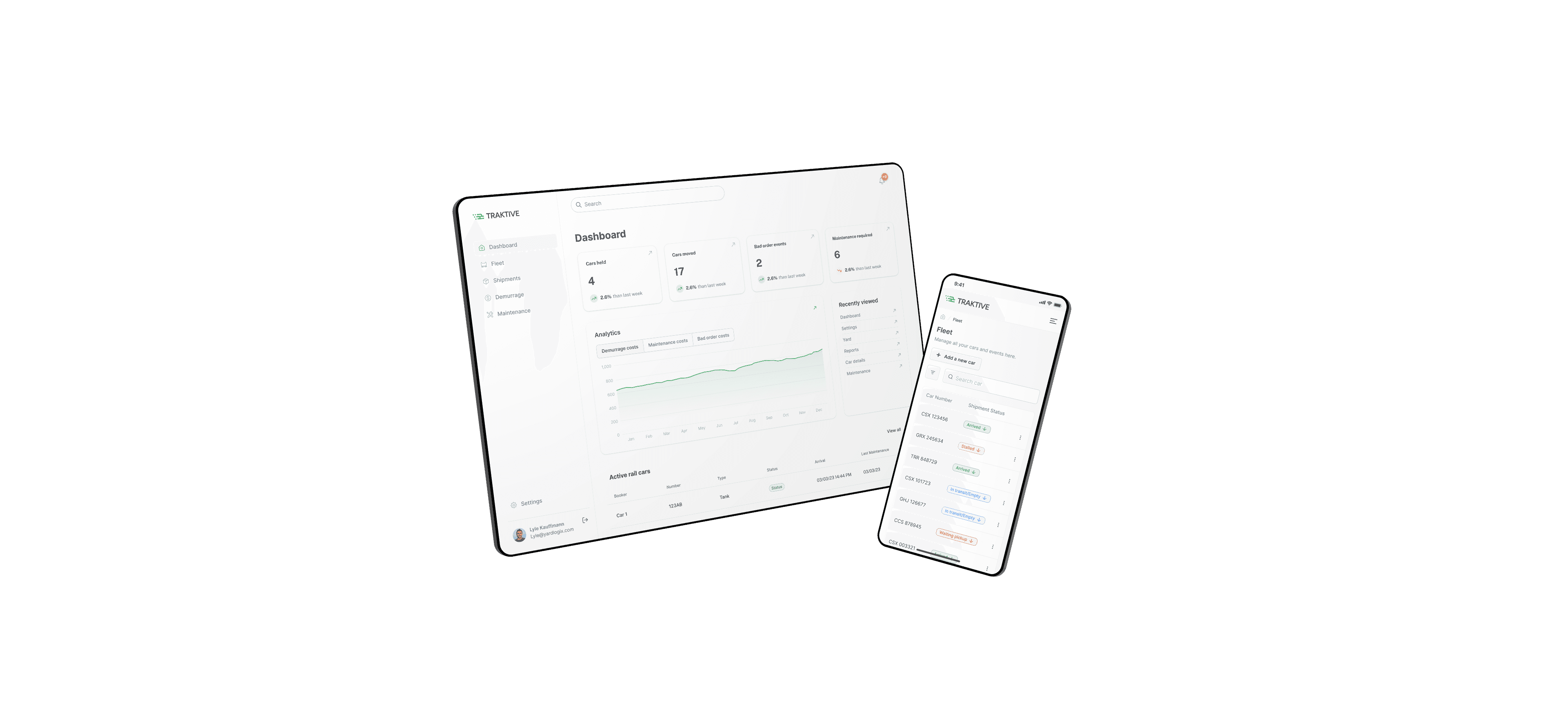
Traktive is a B2B all-in-one, AI-powered platform that streamlines rail operations, with a focus on cost-saving insights for smarter decision-making.
Next project
How it unfolded

Defining project scope

Empathizing with the users

Discovery workshops

Ideation & Wireframes

Design System creation

High-fidelity prototyping

Testing & Launch
The challenge
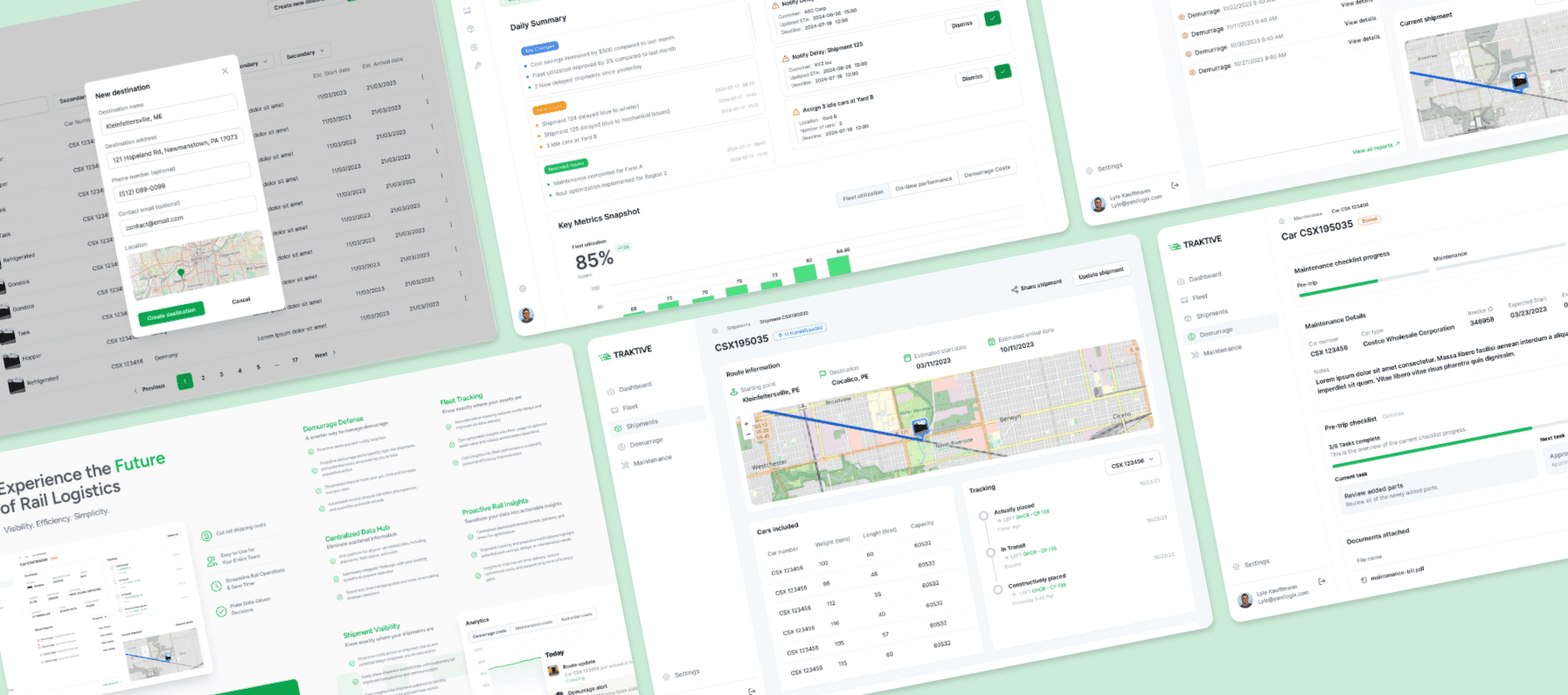
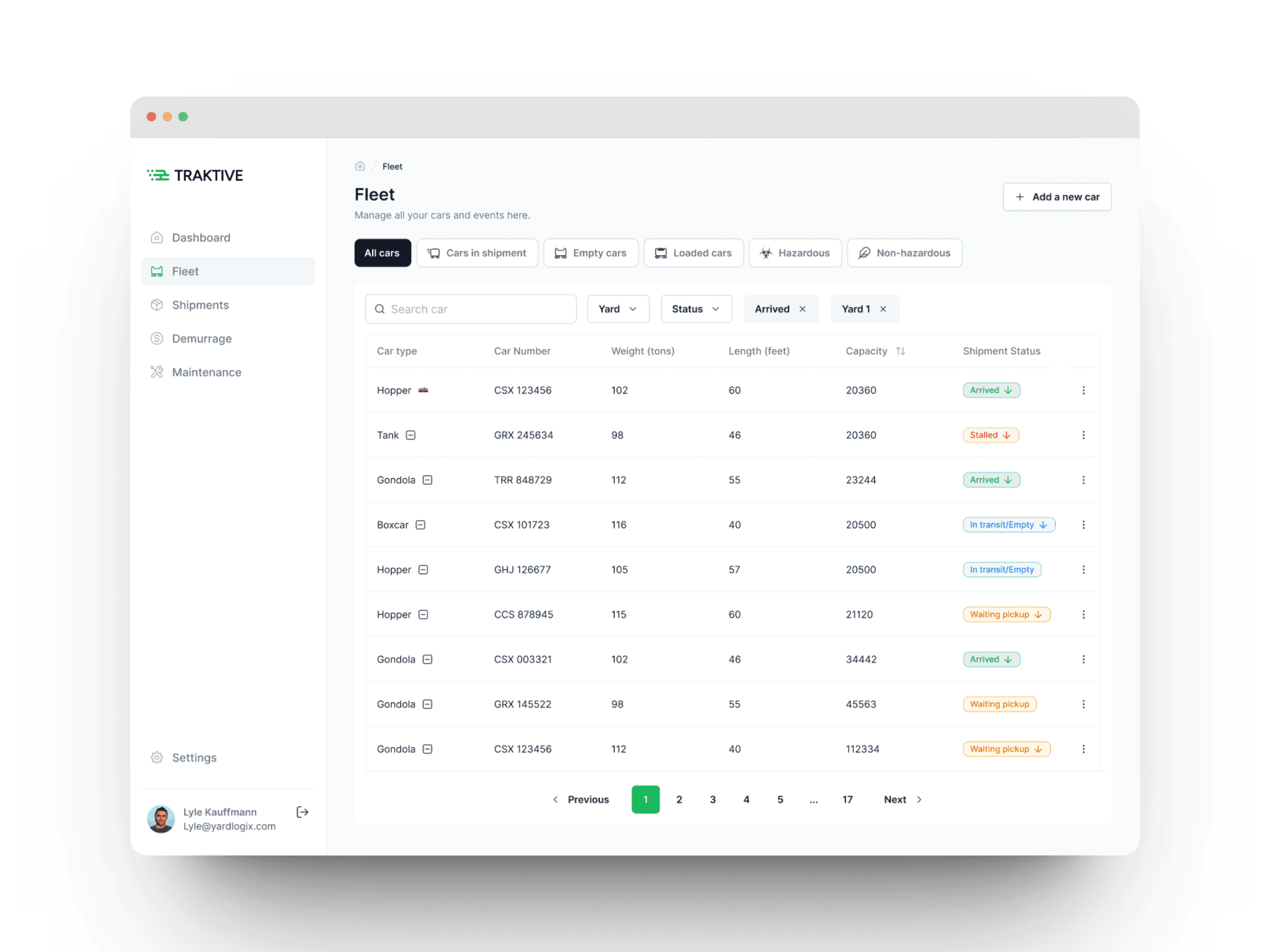
Traktive wanted to build an all-in-one solution for rail logistics. The goal was to fill a gap in the market by developing a centralized data hub that simplifies the complexity of logistics management and empowers users with the information and tools to take decisive action.
The process
For this project, I was responsible for the whole design process.
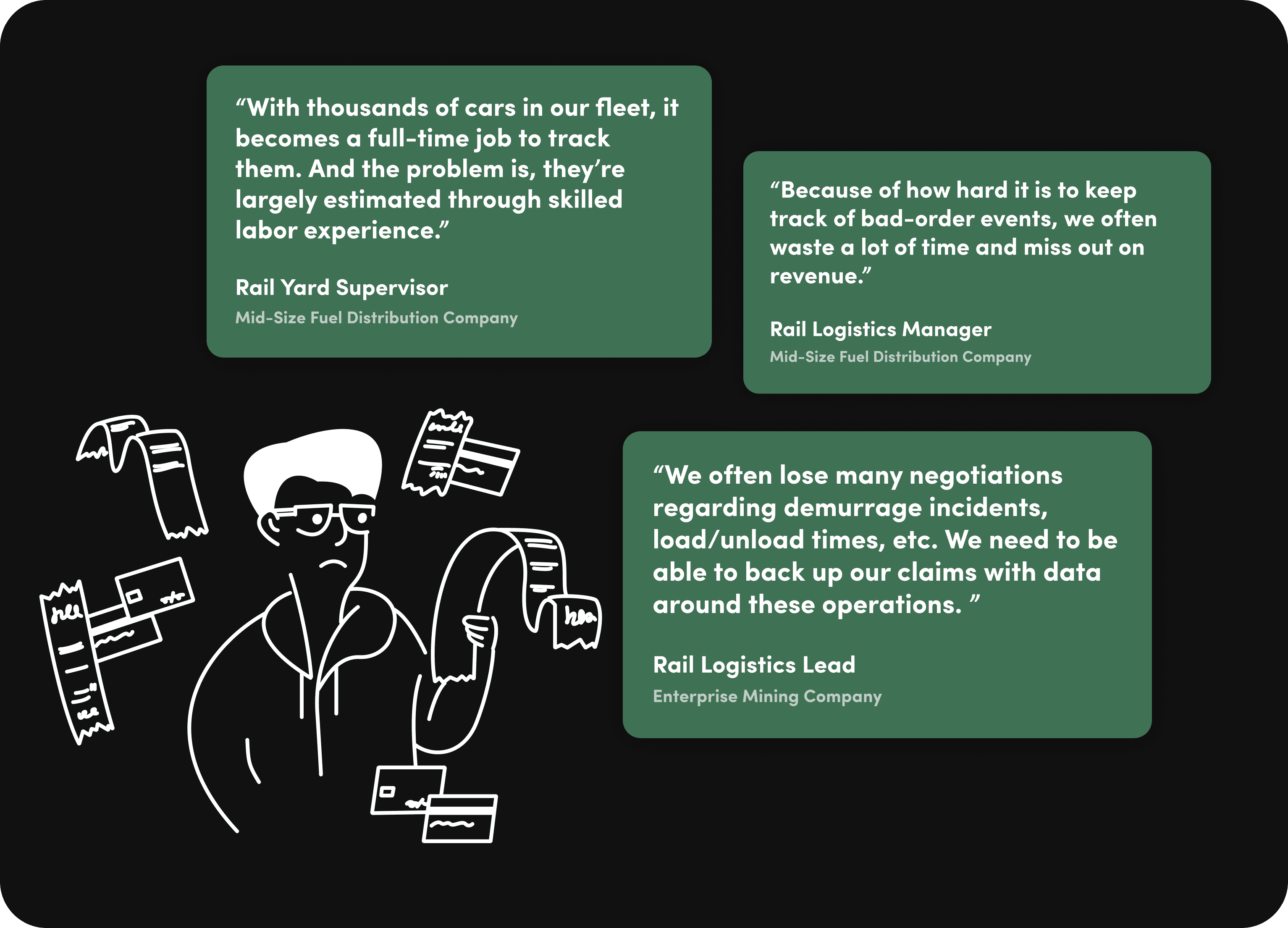
Together with the client, we talked to business owners and potential users to gather requirements, uncover pain-points, needs and challenges.
Empathizing
The business opportunities
The state of the technology
The research indicated that rail shipping is a complex and costly process riddled with inefficiencies.
Additionally, the current available software that is being used for rail operations is archaic and extremely inefficient, and business owners still rely on paper-based systems.
The pain points
The lack of tailored software leads to data bottlenecks and fragmented data access.
Legacy systems fail to provide a holistic view of operations.
Processes are time-consuming, resulting in costly errors for the business.
Record keeping and asset tracking are inneficient.
The needs
A solution that consolidates data and provides actionable insights
A platform that transforms rail logistics into a streamlined, data-driven operation
Proactive cost management and real-time asset tracking
Actionable, organized and easily accessible information about operations
The process
The strategy was based on the Design Thinking approach.
UX Research
Journey map
Prototyping
Usability testing
The Solution
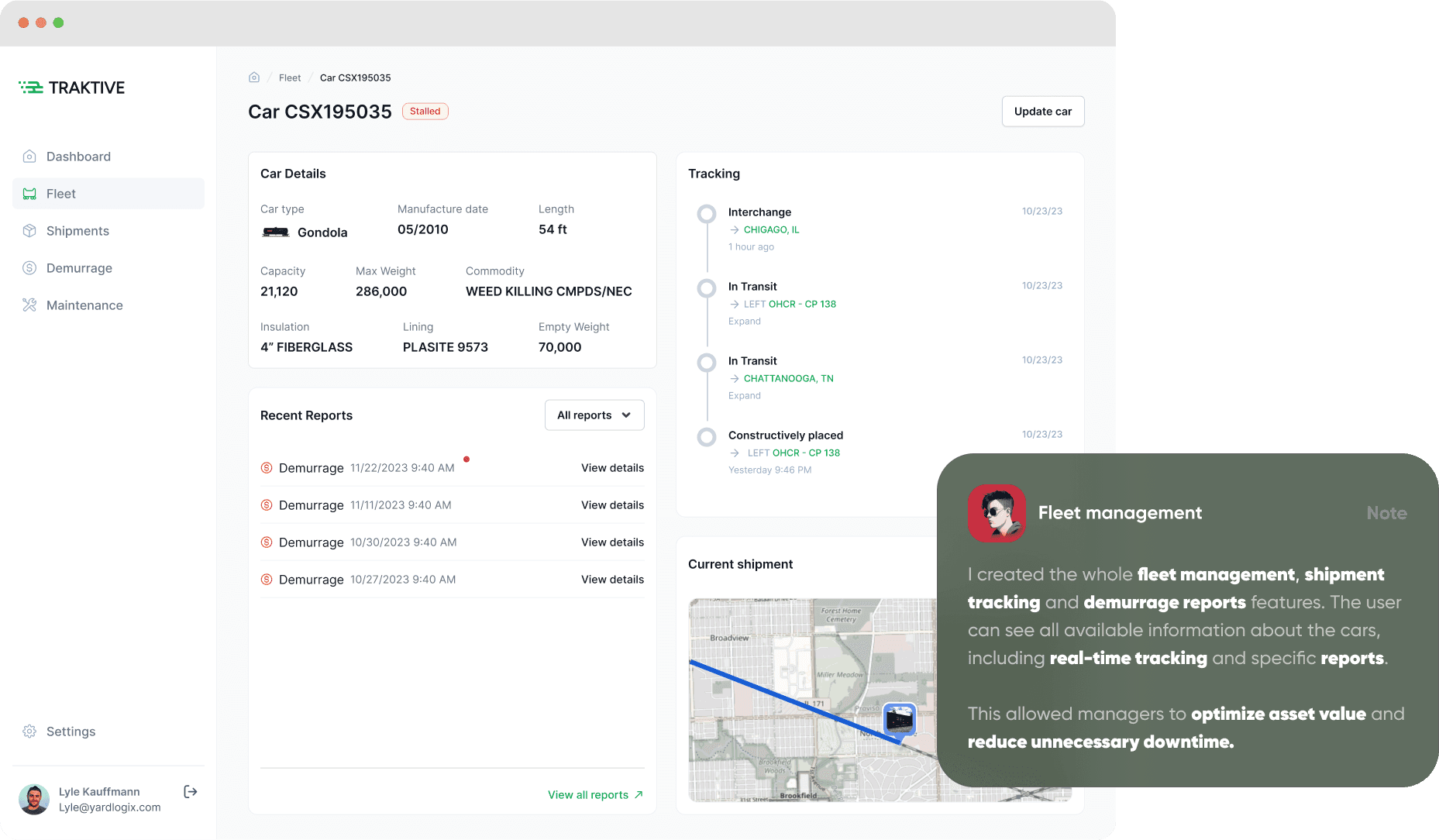
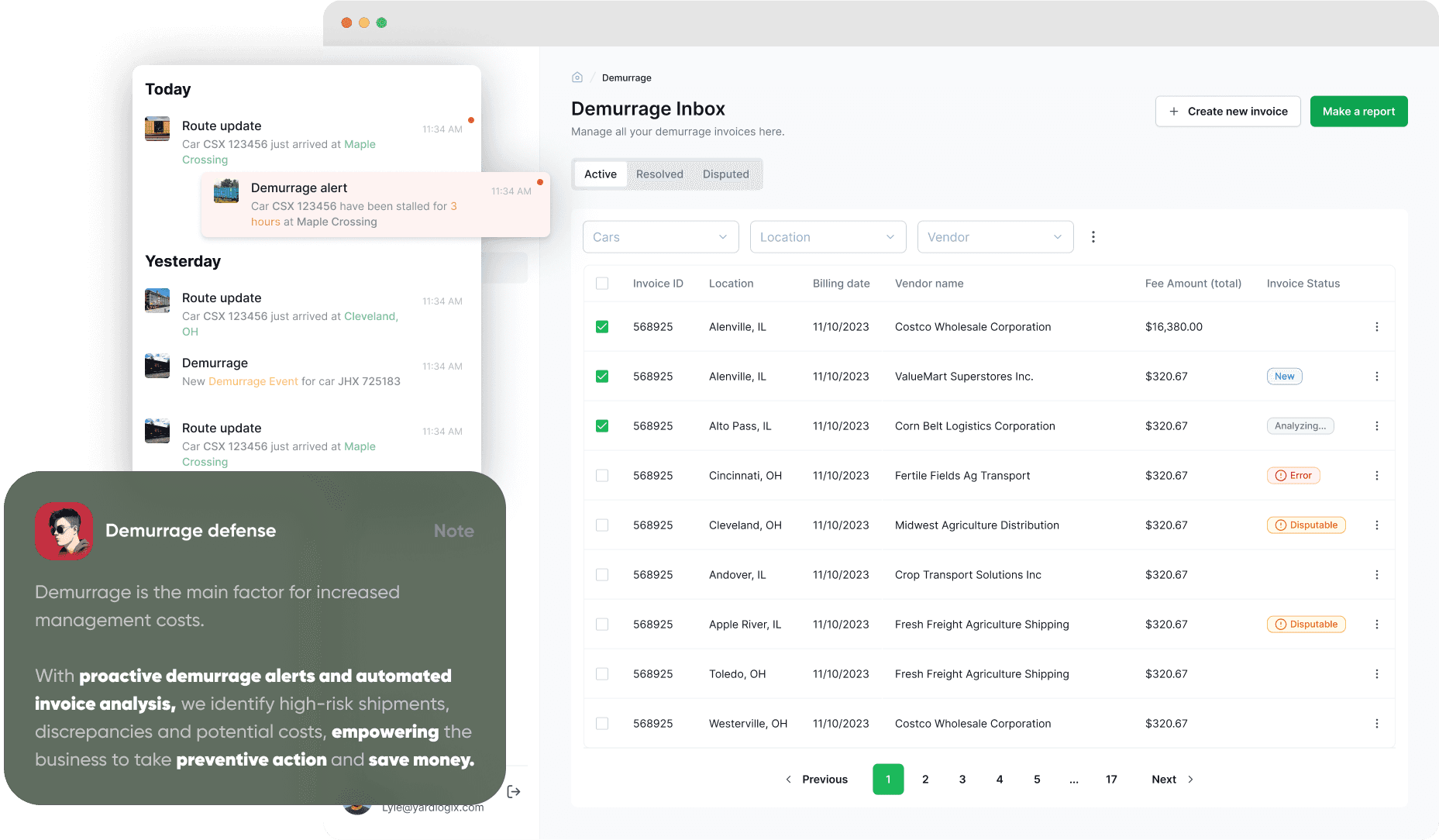
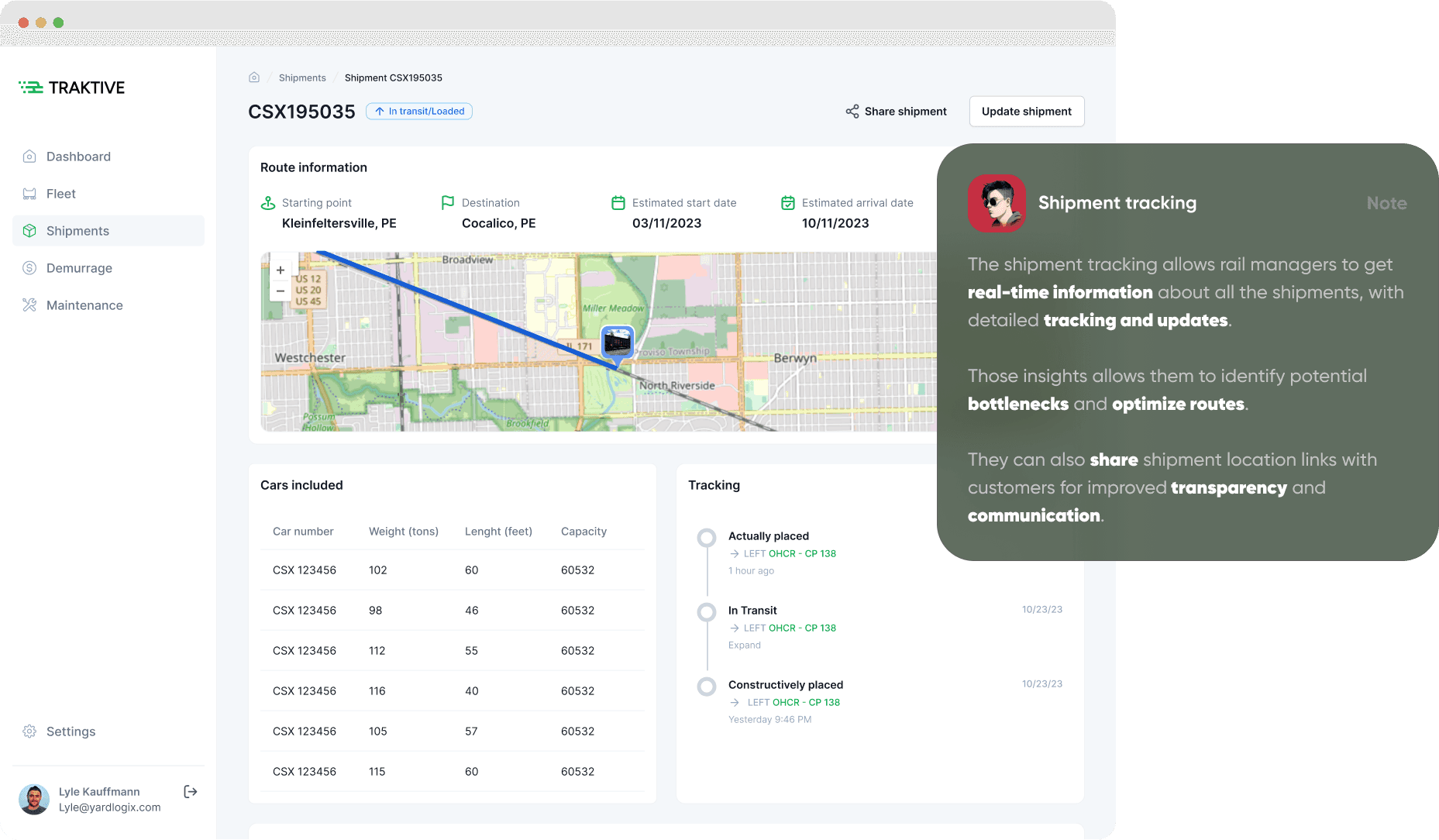
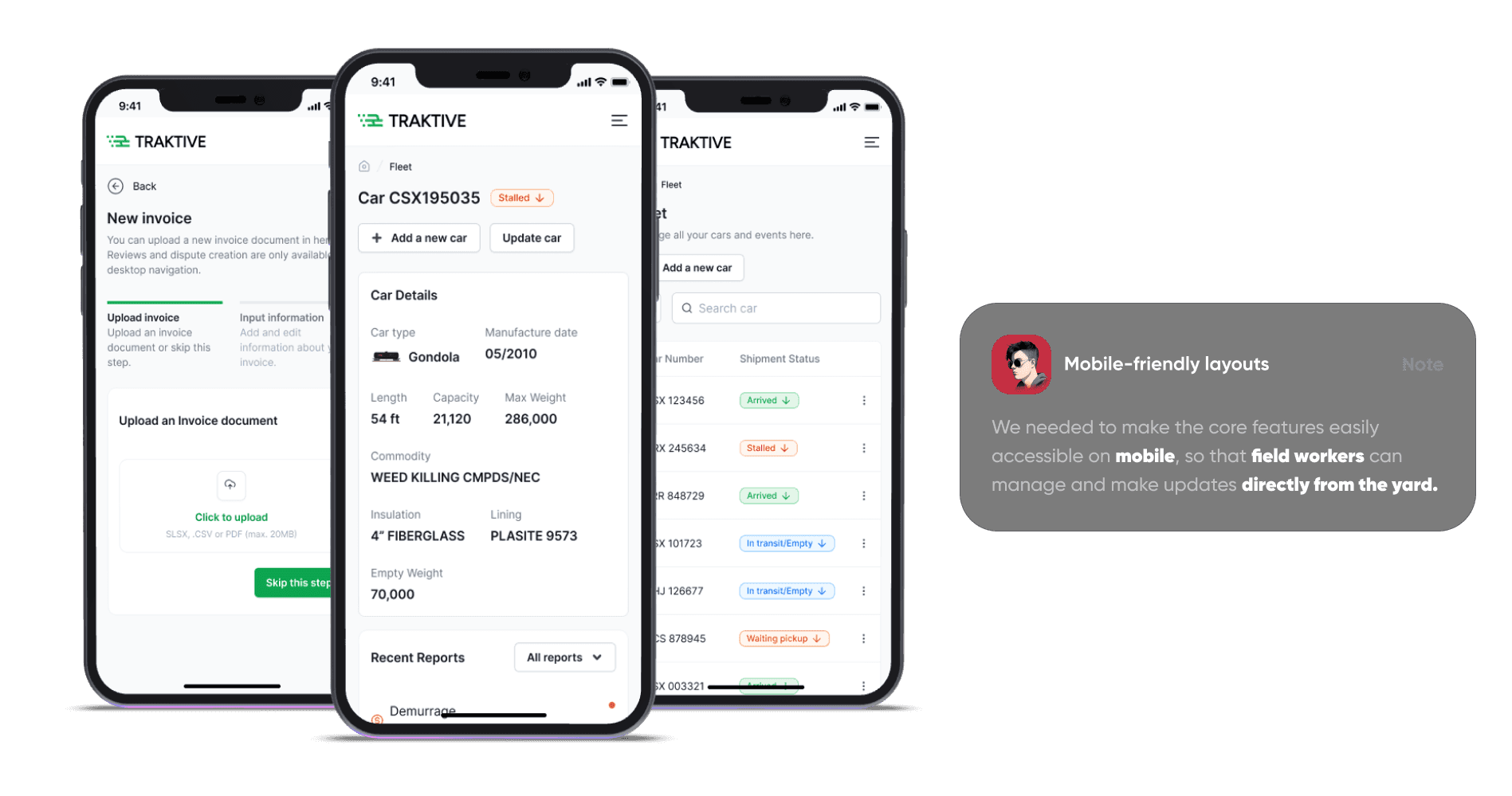
Design System
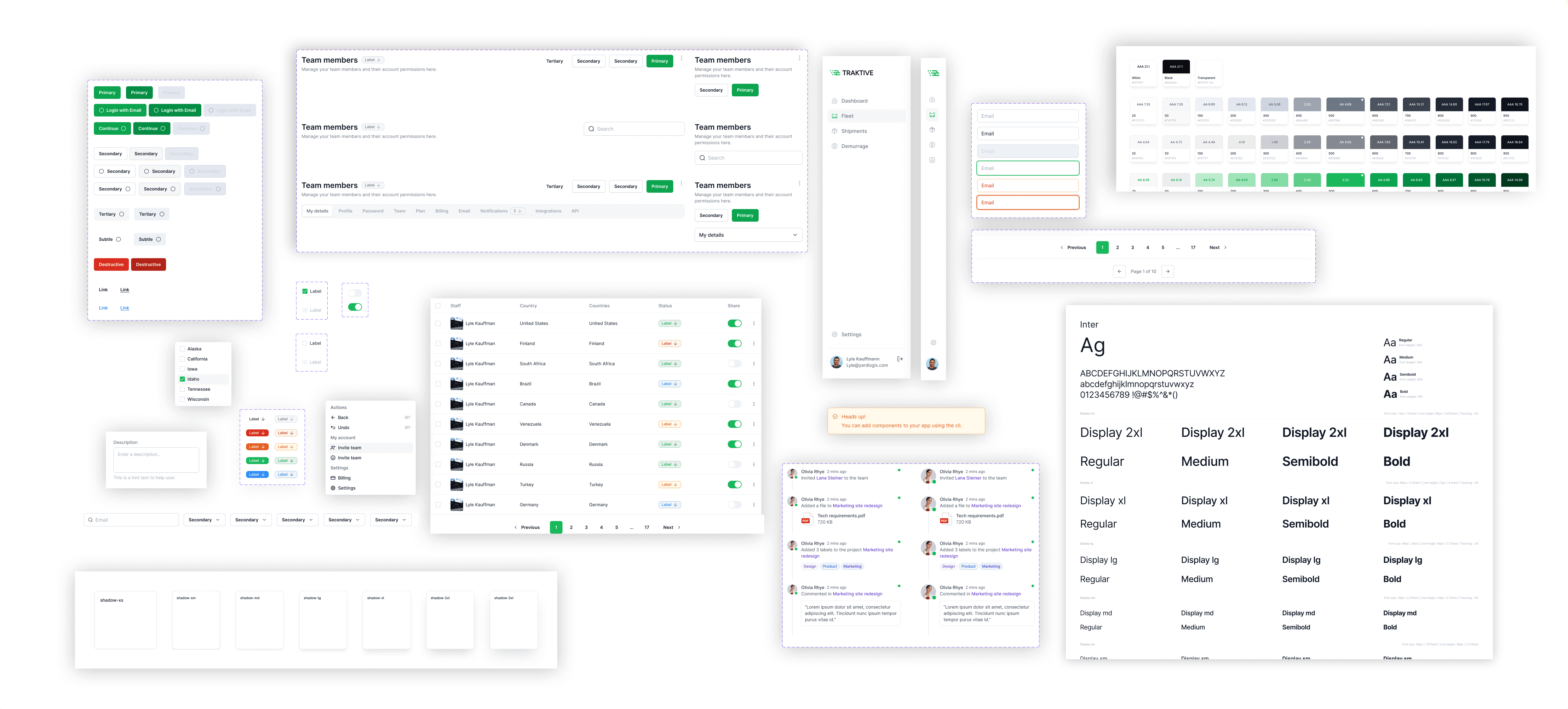
The design system was built in Figma in order to keep consistency throughout the platform.
Impact
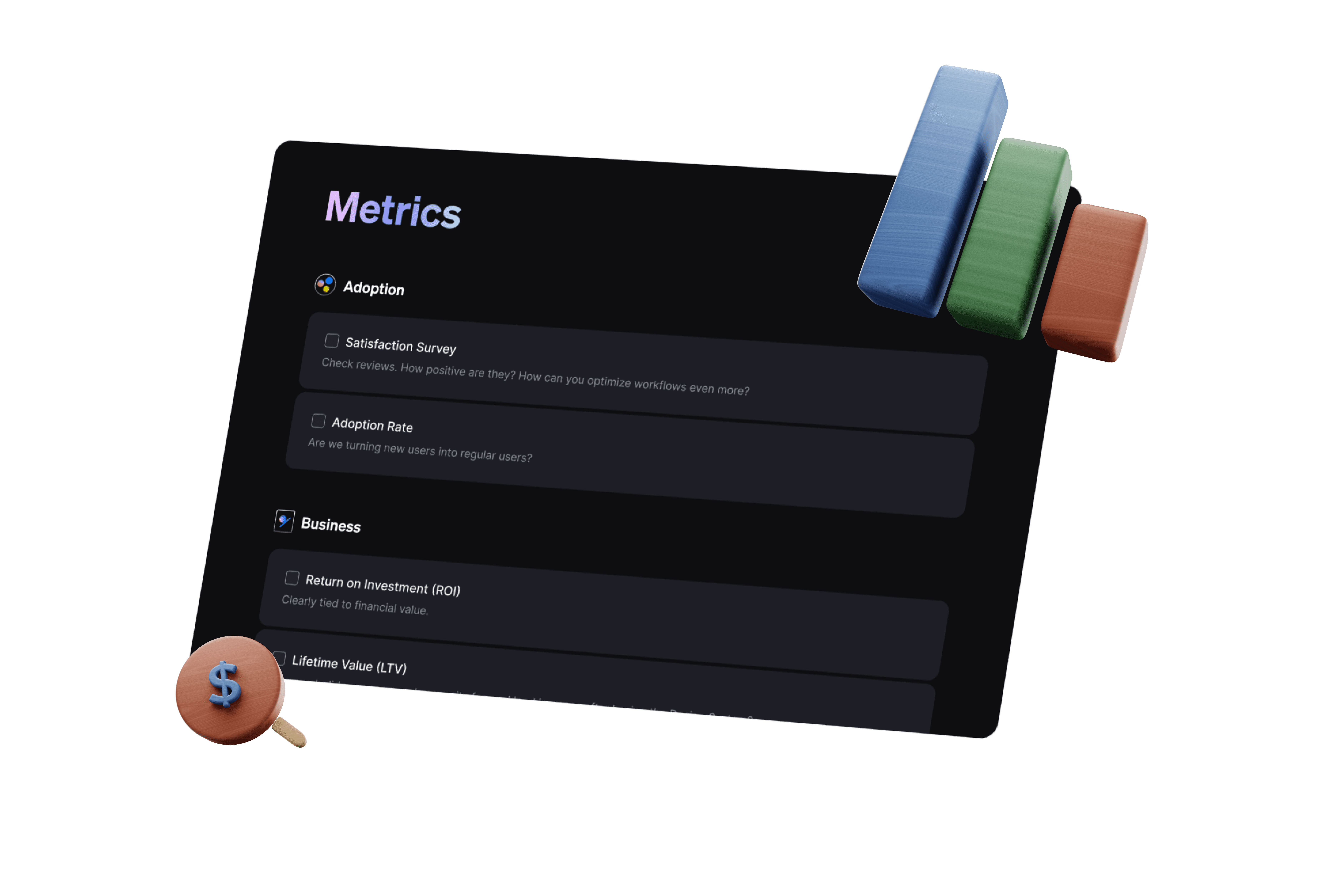
Setting up analytics is a key step for understanding how users interact with the product post-launch period. Some of the most important metrics:
Retention rate
A product that converts new users into regular users has successfully addressed a market need, providing a valuable solution that users adopt to routinely solve their problem.
Lifetime value (LTV)
Lifetime Value (LTV) is a crucial metric that signifies the product's value and benefit to users and customers. Optimizing LTV should be a top priority when developing and enhancing a product.
Monthly Recurring Revenue (MRR)
Monthly Recurring Revenue (MRR) is the predictable, normalized monthly income stream from active subscriptions. Increasing MRR demonstrates product-market fit, customer retention, and a sustainable recurring revenue model.
Churn rate
Churn Rate tracks customer attrition, measuring the percentage of customers who cancel or downgrade their subscriptions over a given period. Minimizing churn is crucial, as it reflects customer satisfaction, product stickiness, and the ability to retain revenue streams.
Let’s work together.
Get in touch.
2024 Lucas Lima
Currently based in Curitiba - Brazil
More projects
Behance
Networking