Sciene

Sciene

Enterprise-grade AI solutions

Enterprise-grade AI solutions

My Role

Discovery, competitor analysis, low & high fidelity prototyping, usability testing & validation.

Year

2025

About the client

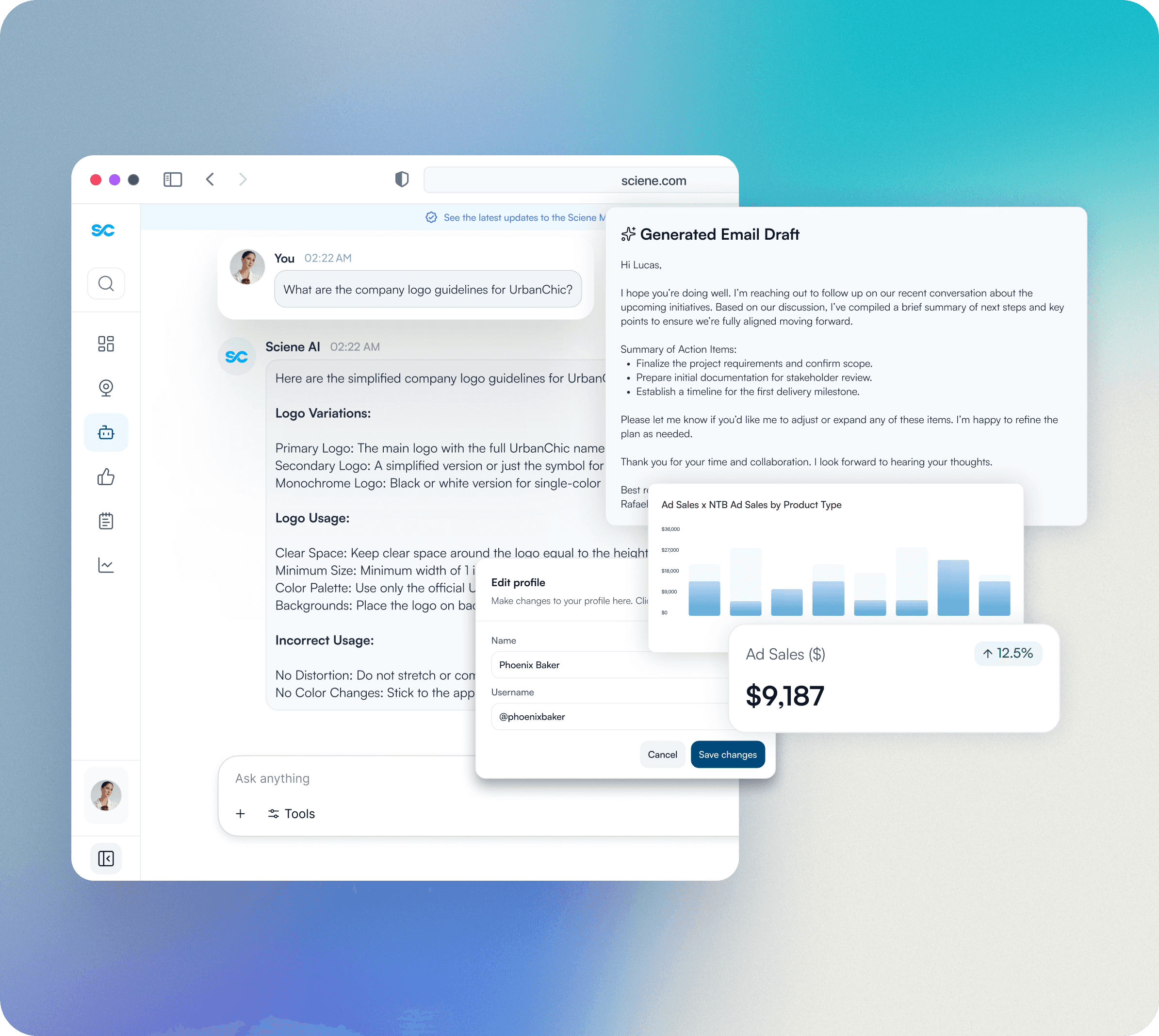
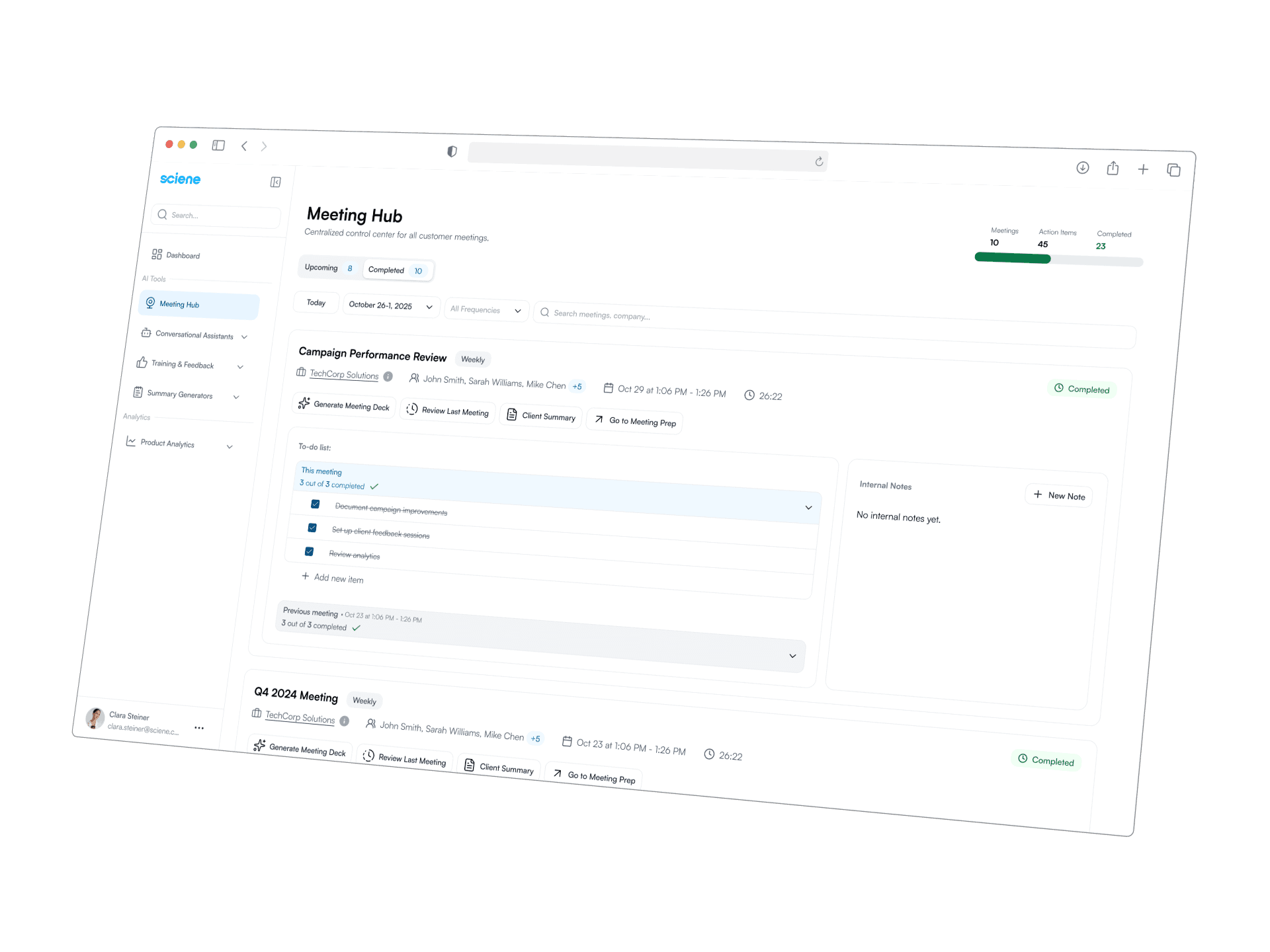
Sciene is an AI-first technology company that provides secure, customizable, enterprise-grade AI solutions.
Next project

Taking ownership of a complex platform, modernizing it, systematizing it, and scaling design operations inside a fast-paced AI company.

Taking ownership of a complex platform, modernizing it, systematizing it, and scaling design operations inside a fast-paced AI company.

How it unfolded

Defining project scope

Defining project scope

Understanding users & workflows

Understanding users & workflows

Usability audit & discovery

Usability audit & discovery

Information Architecture redesign

Information Architecture redesign

Design System creation

Design System creation

High-fidelity prototyping

High-fidelity prototyping

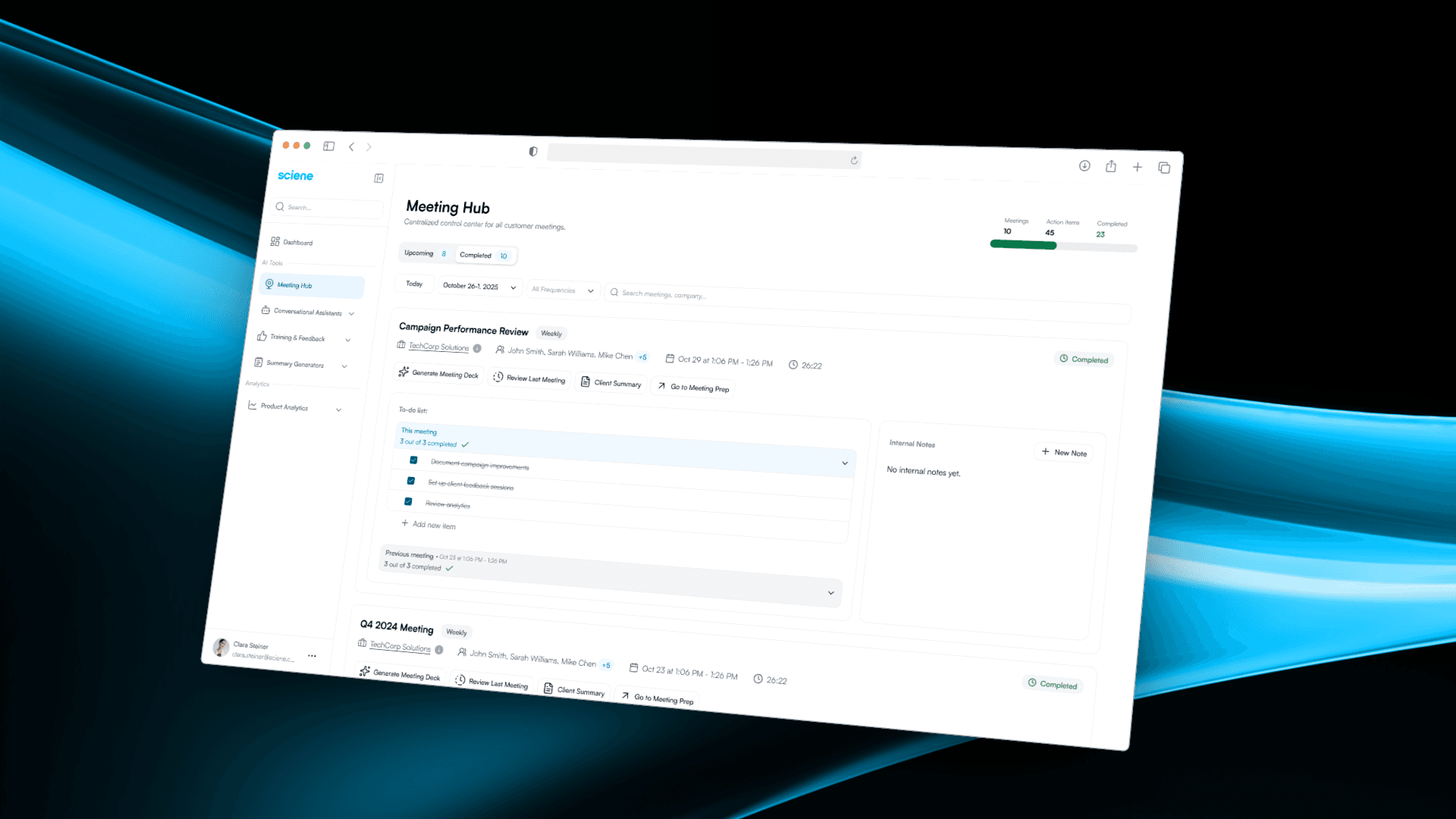
Launch & continuous improvement
Launch & continuous improvement

The challenge
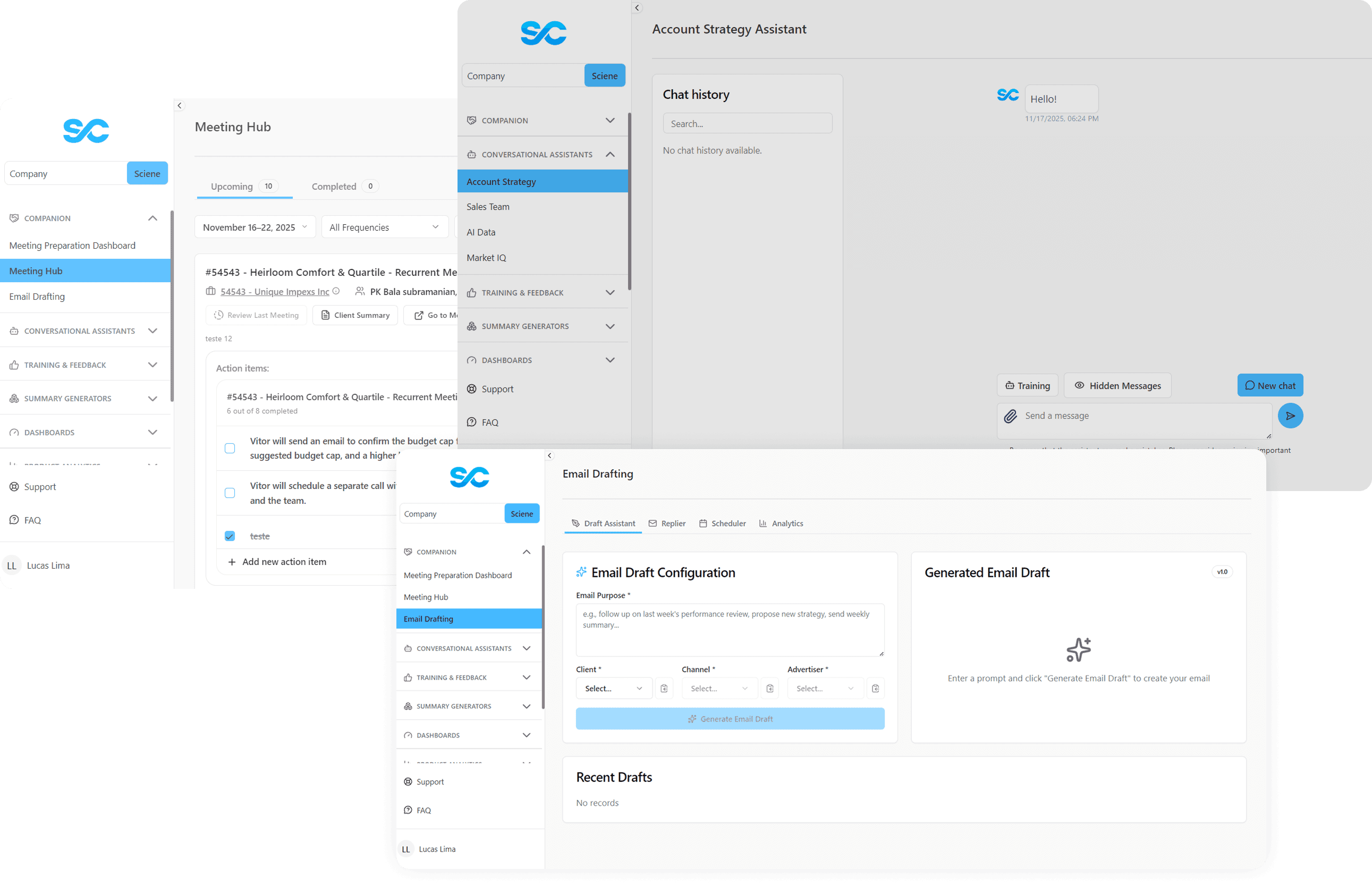
Revamping a complex AI platform required a continuous, multi-layered approach rather than a traditional linear design cycle. As the sole Product Designer, I partnered closely with AI Engineers, Developers, QA, Data Analytics, Sales, and CSM teams to modernize the entire experience, introduce scalable design foundations, and accelerate product delivery.


Below is how the process unfolded.

Revamping a complex AI platform required a continuous, multi-layered approach rather than a traditional linear design cycle. As the sole Product Designer, I partnered closely with AI Engineers, Developers, QA, Data Analytics, Sales, and CSM teams to modernize the entire experience, introduce scalable design foundations, and accelerate product delivery.


Below is how the process unfolded.

Platform Immersion & Usability Audit

Platform Immersion & Usability Audit

I began by conducting a deep dive into the legacy platform to understand its structure, pain points, and technical constraints.


The audit uncovered critical issues:


  • Highly inconsistent components and outdated visuals

  • Fragmented interaction patterns

  • Overloaded screens with unclear hierarchy

  • Navigation friction and lack of discoverability

  • No design system or documentation

  • Accessibility gaps and alignment issues

  • Redundant flows created over time by different teams


This formed the baseline for a full-platform modernization roadmap.

I began by conducting a deep dive into the legacy platform to understand its structure, pain points, and technical constraints.


The audit uncovered critical issues:


  • Highly inconsistent components and outdated visuals

  • Fragmented interaction patterns

  • Overloaded screens with unclear hierarchy

  • Navigation friction and lack of discoverability

  • No design system or documentation

  • Accessibility gaps and alignment issues

  • Redundant flows created over time by different teams


This formed the baseline for a full-platform modernization roadmap.

Stakeholder Alignment & Strategy Mapping

Stakeholder Alignment & Strategy Mapping

I collaborated with PMs, AI Engineering, Sales, and CSM leadership to translate business goals into clear design objectives.


Together we defined:


The strategic role of each AI product (AIChat, Virtual Assistants, Insights Generator, Sales Performance Tool)

What “future-ready usability” means for an AI-first platform

The scope and sequencing of redesign efforts

Foundational design principles: clarity, scalability, performance, and security

Technical considerations like model response times, API output formatting, and knowledge ingestion workflows


This phase ensured that designer, engineers, and business teams were working toward the same North Star.

I collaborated with PMs, AI Engineering, Sales, and CSM leadership to translate business goals into clear design objectives.


Together we defined:


The strategic role of each AI product (AIChat, Virtual Assistants, Insights Generator, Sales Performance Tool)

What “future-ready usability” means for an AI-first platform

The scope and sequencing of redesign efforts

Foundational design principles: clarity, scalability, performance, and security

Technical considerations like model response times, API output formatting, and knowledge ingestion workflows


This phase ensured that designer, engineers, and business teams were working toward the same North Star.

User Research & Workflow Understanding

The objective

I conducted contextual interviews with customers, Sales reps, and CSMs to understand how different teams used the platform in real environments.

This research directly informed how flows and hierarchy should be restructured.

The key findings

Users relied heavily on AI tools but were slowed down by unclear inputs and non-standard UI patterns

Navigation contributed to repeated errors and support tickets

Users improvised external tools (Notion, Excel, manual documents) to fill product gaps

CSMs struggled to onboard clients due to the platform’s complexity
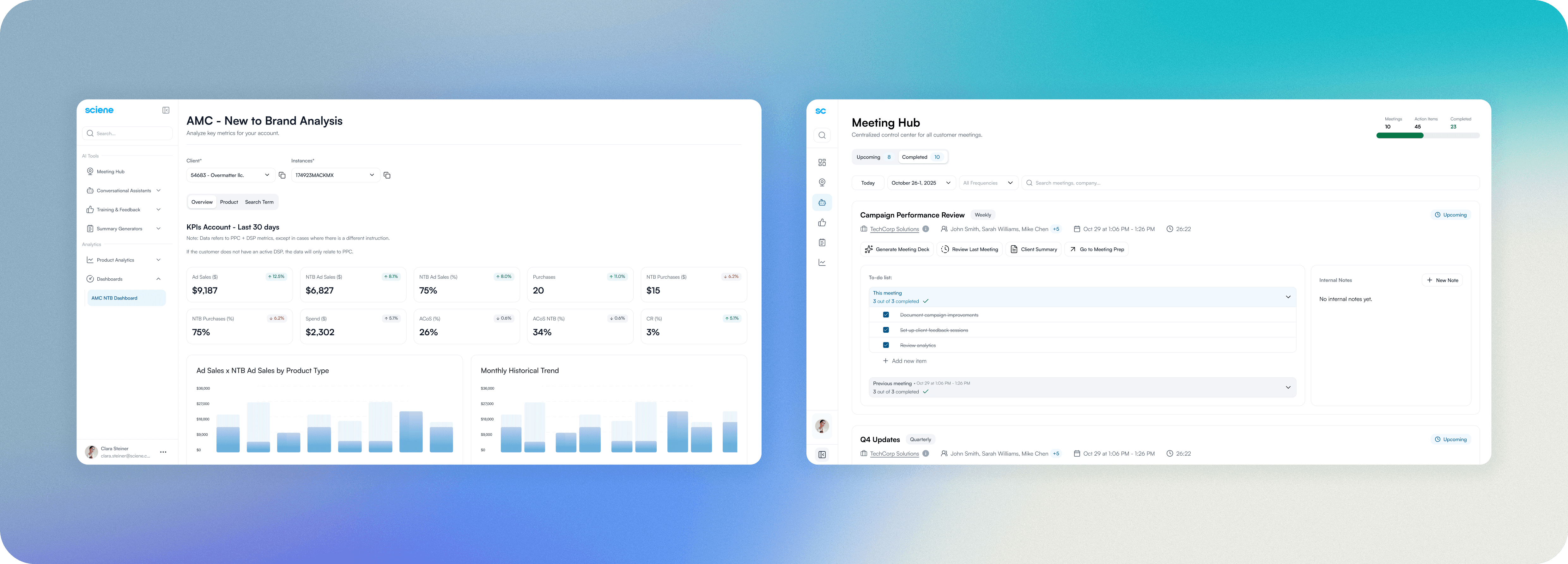
IA Redesign & System Architecture Foundations

IA Redesign & System Architecture Foundations

Before touching high-fidelity UI, I redefined the information architecture to support a scalable future:


  • Clarified navigation groups and product boundaries

  • Introduced consistent patterns for multi-step workflows

  • Defined global rules for data hierarchy, table structures, and actions

  • Established clear entry/exit points for AI features

  • Standardized how AI results, errors, and loading states appear across products


This enabled a unified, predictable experience across all Sciene products.

Before touching high-fidelity UI, I redefined the information architecture to support a scalable future:


  • Clarified navigation groups and product boundaries

  • Introduced consistent patterns for multi-step workflows

  • Defined global rules for data hierarchy, table structures, and actions

  • Established clear entry/exit points for AI features

  • Standardized how AI results, errors, and loading states appear across products


This enabled a unified, predictable experience across all Sciene products.

Low-Fidelity Exploration & Flow Redesign

Low-Fidelity Exploration & Flow Redesign

I redesigned every major flow in the platform, including:


  • AI onboarding

  • Knowledge ingestion & document upload pipeline

  • AIChat interactions & message handling

  • Real-time insights generation

  • Sales performance analytics

  • Role & user management

  • Error and edge-case handling

  • Settings, navigation, dashboards, and administrative tools


Multiple variations were tested internally to validate feasibility and clarity before moving into UI.

I redesigned every major flow in the platform, including:


  • AI onboarding

  • Knowledge ingestion & document upload pipeline

  • AIChat interactions & message handling

  • Real-time insights generation

  • Sales performance analytics

  • Role & user management

  • Error and edge-case handling

  • Settings, navigation, dashboards, and administrative tools


Multiple variations were tested internally to validate feasibility and clarity before moving into UI.

Building the New Design System (from scratch)

Building the New Design System (from scratch)

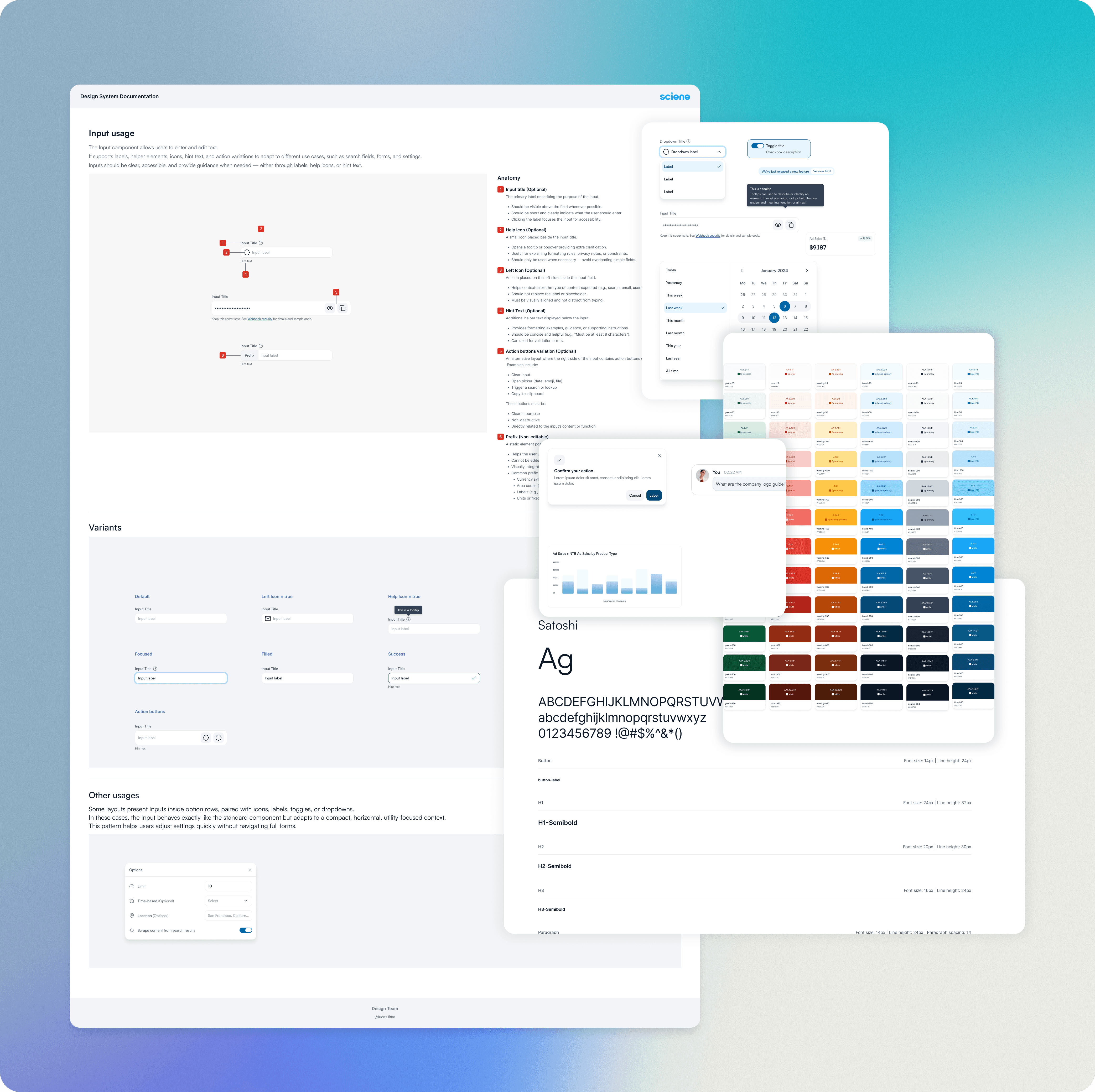
Since no system existed, I created a full-scale design system covering everything:


  • Color system, semantic tokens, elevation

  • Typography scale and rhythm

  • Grid, spacing, and layout foundations

  • Full component library (50+ components)

  • Interaction patterns

  • Data visualization guidelines

  • AI interaction rules (inputs, results, errors, tooltips, loaders, model states)

  • Accessibility guidelines and contrast compliance

  • Documentation for engineering handoff


This unified the visual language and drastically improved engineering speed.

Since no system existed, I created a full-scale design system covering everything:


  • Color system, semantic tokens, elevation

  • Typography scale and rhythm

  • Grid, spacing, and layout foundations

  • Full component library (50+ components)

  • Interaction patterns

  • Data visualization guidelines

  • AI interaction rules (inputs, results, errors, tooltips, loaders, model states)

  • Accessibility guidelines and contrast compliance

  • Documentation for engineering handoff


This unified the visual language and drastically improved engineering speed.

Validation & Iteration

Validation & Iteration

Testing & Cross-Team Validation

Interactive prototypes were tested with:


  • Customers using real workflows

  • CSMs testing onboarding scripts

  • Sales validating demo scenarios

  • Engineers reviewing feasibility


Feedback loops were fast and iterative, ensuring designs solved real problems and aligned with technical reality.

Development Support & Handoff

To accelerate implementation, I delivered:


  • Detailed Figma specs

  • UX guidelines and component documentation

  • Accessibility and behavior notes

  • Flows annotated for engineering

  • Loom walkthroughs explaining rationale

  • Quick QA support during development


This significantly reduced back-and-forth and improved release speed.

Impact
Let’s work together.

Get in touch.

Get in touch.

Get in touch.

2024 Lucas Lima

Currently based in Curitiba - Brazil

More projects

Behance

Behance

Behance

Networking

Linkedin

Linkedin

Linkedin

Create a free website with Framer, the website builder loved by startups, designers and agencies.